The Dyson Toothbrush: Do We Really Need a Toothbrush That Does All That?
Well, Dyson has made vacuum cleaners that map your home, hairdryers that promise to revolutionise your morning routine (according to my daughter at least), and now… a toothbrush that can see between your teeth.
Yes, you read that correctly.
The new Dyson CameraJet is a toothbrush with a built-in camera, artificial intelligence and a little jet of liquid designed to clean between your teeth while you brush.
At around $799 in Australia, it is certainly not the cheapest way to start your day. Or end your day for that matter!
But does it actually make brushing better? And, more importantly, do we all need one?
What is so special about it?
Dyson has taken a fairly familiar electric toothbrush concept and given it a serious technological makeover.'
This image is for illustrative purposes only - exact features may differ.
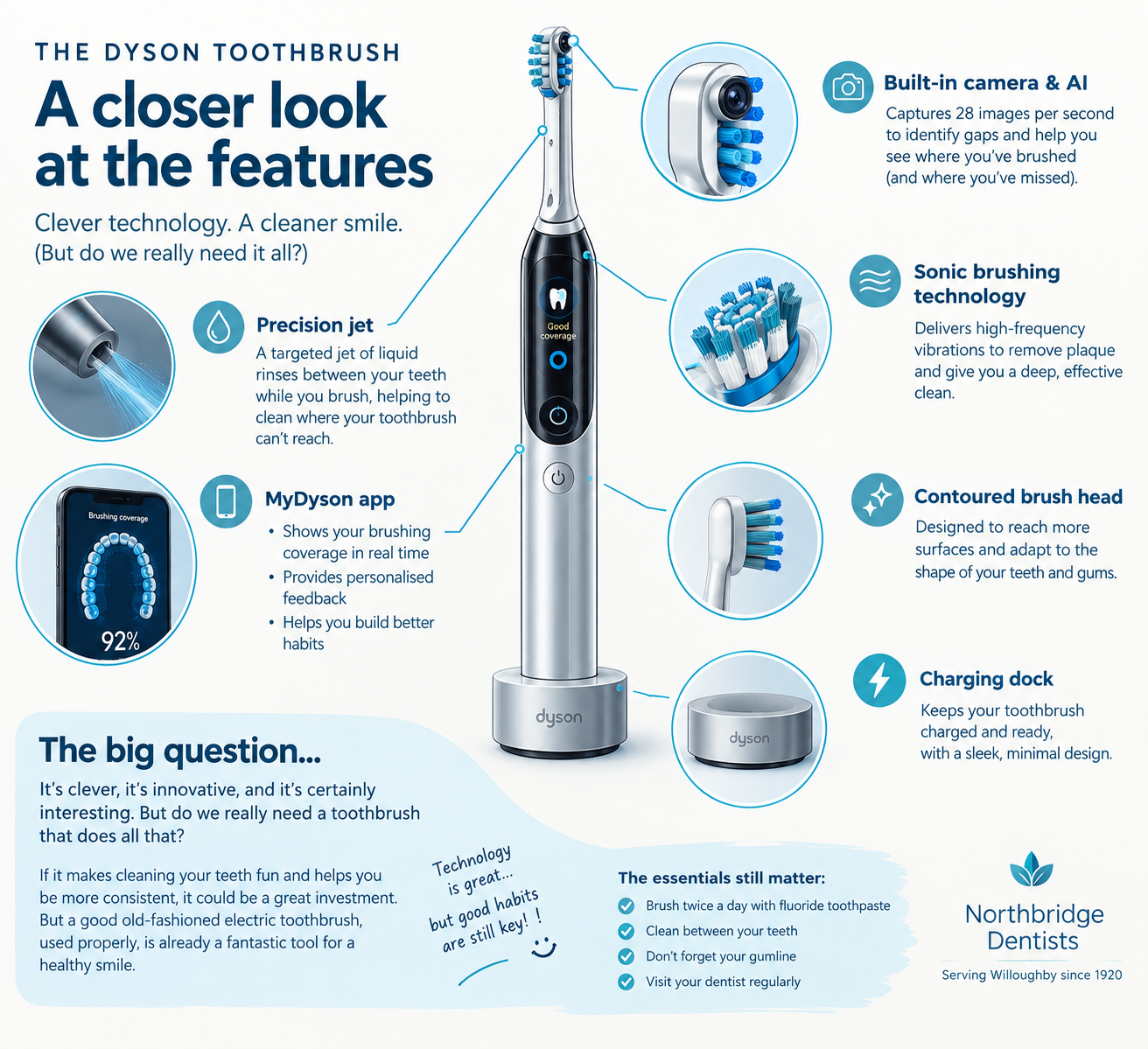
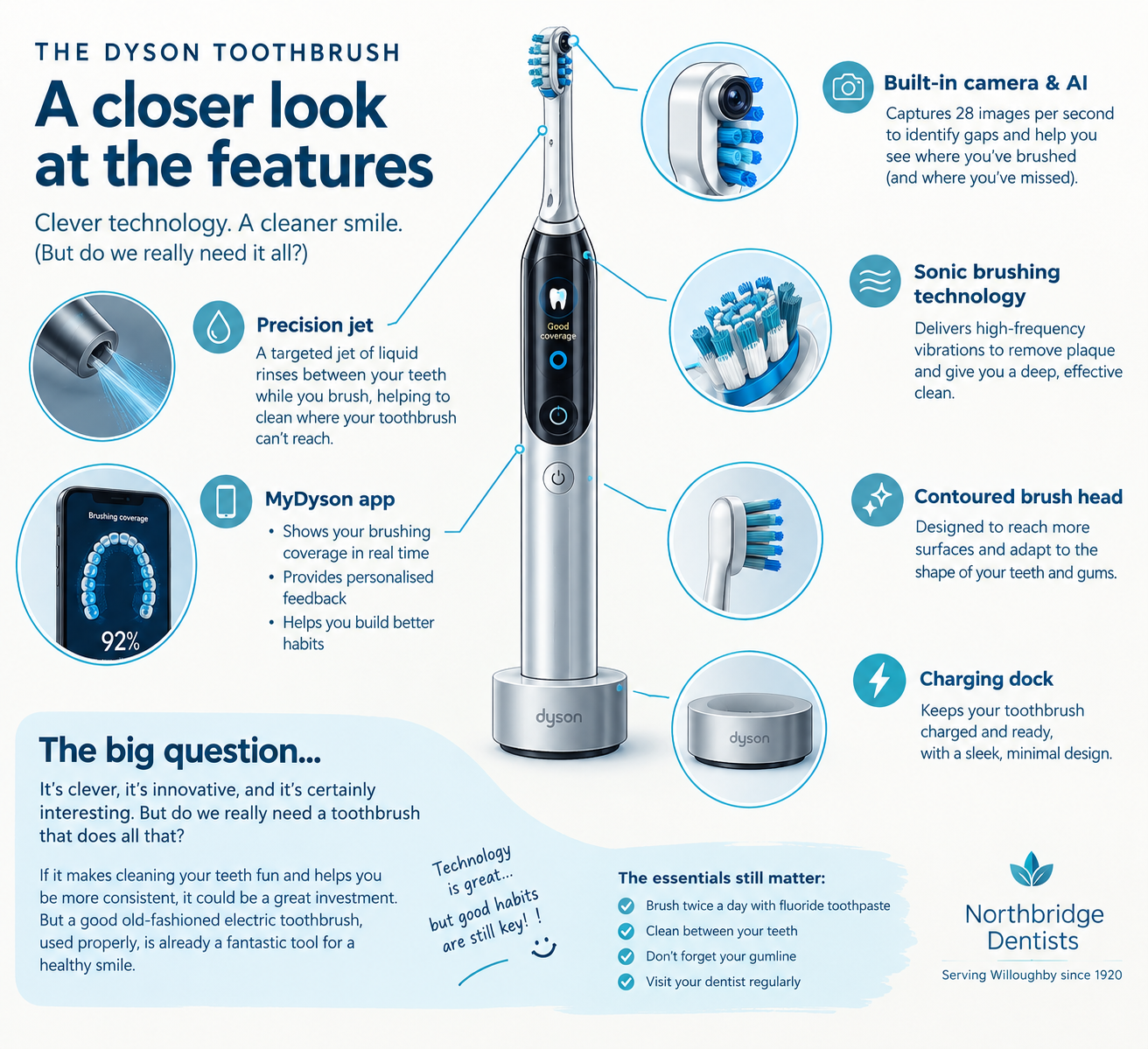
The CameraJet combines:
A camera and AI to identify gaps between your teeth.
A targeted jet of mouth rinse intended to clean between teeth as you brush.
Sonic brushing technology and a contoured brush head.
An app that can show your brushing coverage and provide feedback on your technique.
Dyson says the camera analyses 28 images per second and the jet can deliver liquid into the gaps between teeth. The idea is to combine brushing and a form of water-based interdental cleaning in one routine.
It is undeniably clever. But clever and necessary are two very different things.
The case for Dyson: If it makes cleaning fun, go for it!
Here's where I think Dyson deserves some credit.
For many people, brushing their teeth is a chore. It's something they do because they know they should, rather than something they particularly enjoy.
And if a new toothbrush makes someone more interested in their oral hygiene, more consistent with brushing, or more curious about whether they are doing a good job, that is a positive.
If you are someone who loves technology, enjoys tracking progress, or finds the idea of seeing where you've missed a little motivating, the Dyson could be appealing.
And if it encourages you to spend the full two minutes brushing rather than rushing through it in 45 seconds, even better.
Anything that encourages people to take better care of their teeth and gums is worth considering.
There is also something healthy about a company like Dyson entering the oral-care market and challenging established players. Competition can encourage innovation, improve products and prevent manufacturers from becoming complacent.
And for elderly patients, or people with limited dexterity who have a hard time brushing and flossing in the first place? Well this is surely better than nothing.
The case against Dyson: Do we really need all the bells and whistles?
This is where my inner dentist starts asking a few questions.
Do we really need a camera in our toothbrush?
Do we need an app to tell us whether we've brushed the left side of our mouth for long enough?
Do we need a jet of mouth rinse fired between our teeth every time we brush?
The truth is that any good electric toothbrush, used properly, is already an excellent tool for maintaining oral hygiene. And it certainly doesn't need to cost $799 to be effective.
Of course, Dyson isn't claiming that its product is the only way to clean your teeth. The company is offering a different approach, combining several functions into one device. Whether that added convenience and technology are worth the price is ultimately a personal decision.
What about the flossing?
This is probably the most interesting aspect of the CameraJet (and the place where I push back strongest actually)
Cleaning between your teeth is important because a toothbrush cannot effectively reach every surface between teeth. That is why interdental cleaning — whether with floss, interdental brushes or another suitable method — is such an important part of a good oral hygiene routine.
Dyson's targeted liquid jet is interesting. But as I say, plaque is sticky, and often hides in those tight gaps. No amount of high-pressure water will get all the way through every contact point - and here, the mechanical action of floss in removing sticky plaque all the way through the contacts, is still supreme.
That being said, perhaps around implants, for people with gum recession, or flushing under bridges where floss can’t get to, it might be useful. But it doesn’t completely replace flossing.
Your friendly Northbridge Dentist can help you work out what is appropriate for your mouth.
So, should you buy one?
My honest answer?
If it makes cleaning your teeth fun, then go for it.
If you love gadgets, enjoy technology, and think the Dyson CameraJet will encourage you to brush more consistently and clean between your teeth, then it may be a worthwhile investment.
If you already have a good electric toothbrush, use it twice a day, clean between your teeth and attend regular dental check-ups, you probably don't need to rush out and buy one.
There are plenty of other excellent toothbrushes on the market, and you can achieve good oral hygiene without spending hundreds of dollars on the latest gadget.
But I do think Dyson's arrival is a good thing.
It might encourage established electric toothbrush manufacturers to keep innovating, improve their products and perhaps even offer better value for money.
Competition is healthy — even when it involves toothbrushes.
The Dyson CameraJet is clever. It is innovative. It is interesting.
At Northbridge Dentists, we're always interested in new technology that can help our patients look after their teeth and gums. But we also believe that the fundamentals of good oral hygiene remain just as important as ever.
And if Dyson's new toothbrush makes brushing a little more enjoyable? Well, that's certainly something to smile about.
